
Key takeaways
What is linen? Origin and Production
Linen is a natural fiber extracted from the stem of the flax plant. From the long bast fibers of flax, a yarn is spun, which is then woven into linen fabric. What is linen made of? A pure plant fiber that has been used for textiles for millennia.
The elaborate journey from plant to fabric explains the material's character. Linen is firmer and smoother than cotton and possesses a typical, slightly irregular structure that gives each piece a natural look.
Properties of Linen
Linen combines several properties that make it particularly suitable for summer. The fiber is cooling and breathable, absorbs moisture well, and releases it quickly. This makes linen feel pleasantly fresh on warm days.
Additionally, it has high tear resistance: linen is more robust than many other natural fibers and becomes softer with each wash. The well-known downside is wrinkling. Since the fiber is not very elastic, wrinkles form quickly. These are part of linen's character and are consciously appreciated by many.
Recognizing Linen Quality
There are significant differences between simple and high-quality linen. Four characteristics help in classification.
Fiber Quality
High-quality linen is spun from long, uniform flax fibers. Long fibers result in a smoother, stronger yarn and a fabric that pills less and lasts longer.
Weave Density and Grammage
A densely woven linen with appropriate grammage appears more valuable, drapes better, and is more durable. Very light, loosely woven fabrics wrinkle more and are more delicate.
Workmanship
Clean, even seams and a regular weave pattern indicate careful workmanship. For a linen blazer, quality and fit are also evident in the shoulders and lining.
Pure or as a Blend
Pure linen is particularly breathable, while blends with cotton or wool wrinkle less and are more dimensionally stable. A look at the material composition on the label shows what you have in front of you.
-
Long, uniform flax fibers for a smooth, strong yarn
-
Dense weave with appropriate grammage
-
Clean seams and a regular weave pattern
-
Clear material composition, pure or as a deliberate blend
-
For blazers, a clean fit at the shoulders and lining
Expert tip: Pre-washed or enzyme-washed linen is softer from the start, wrinkles a little less, and shrinks hardly at all during the first wash. A look at the label is worthwhile.
Washing Linen: Step-by-Step
Linen can be washed well if you proceed gently. The following four steps preserve color and shape.
Check care label. The information on the label is always decisive, especially for blazers and blended fabrics.
Prepare. Turn the garment inside out and wash similar colors together.
Wash gently. Wash linen on a delicate cycle at about 30 to 40 degrees with a mild detergent. Water that is too hot can cause pure, unwashed linen to shrink.
Do not wring, dry in shape. Gently squeeze out the water and air dry linen. Remove it when slightly damp, as this makes it easier to iron later.
Ironing and Drying Linen
Linen is best ironed while still slightly damp. Use the linen or cotton setting on your iron and ideally work from the inside out to avoid shiny spots. If you like the natural wrinkle, you can reduce ironing and simply hang linen well-shaken out.
Linen and tumble dryers are only partially compatible: use the dryer only if the care label permits, and then at a low temperature. Too much heat in the dryer can shrink linen and stress the fibers. Air drying is usually the gentler choice.
Why Linen Wrinkles
Linen's typical wrinkle has a simple reason: the fiber is naturally not very elastic and does not return to its original shape after creasing. This is not a defect in quality, but a characteristic of the material. If you want fewer wrinkles, opt for a linen blend or remove the laundry when slightly damp and iron it into shape.
Combining Linen in Summer
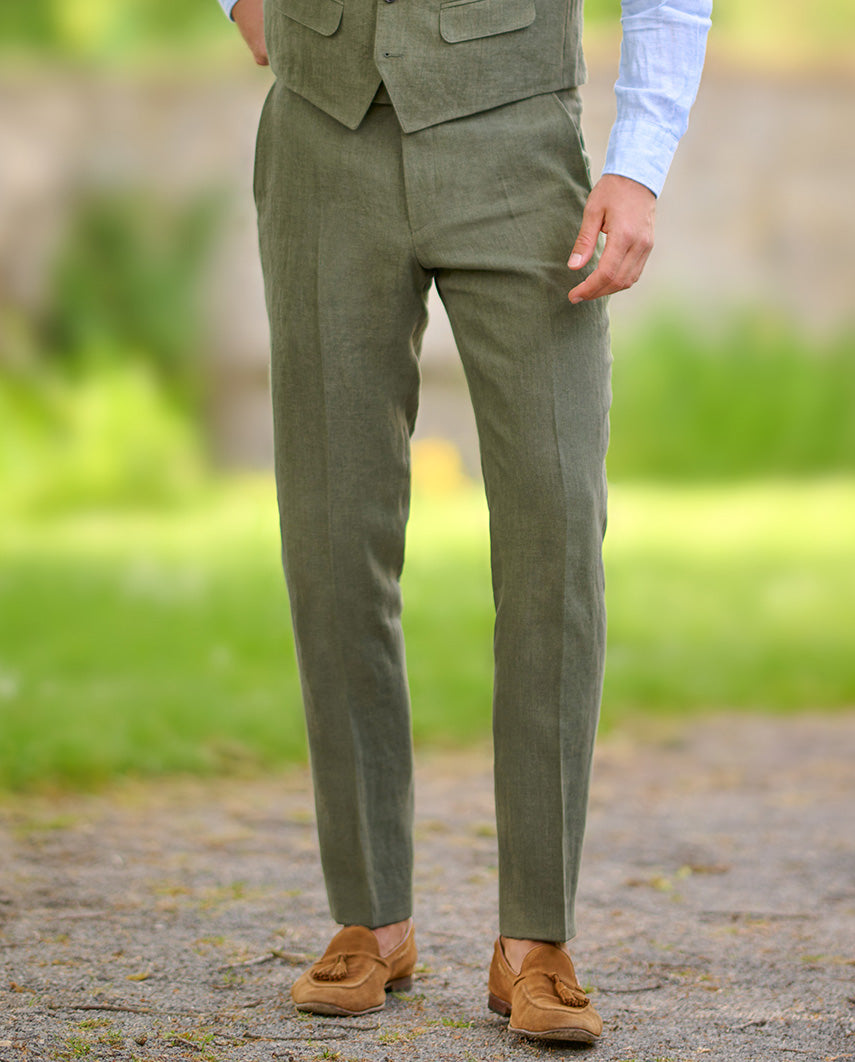
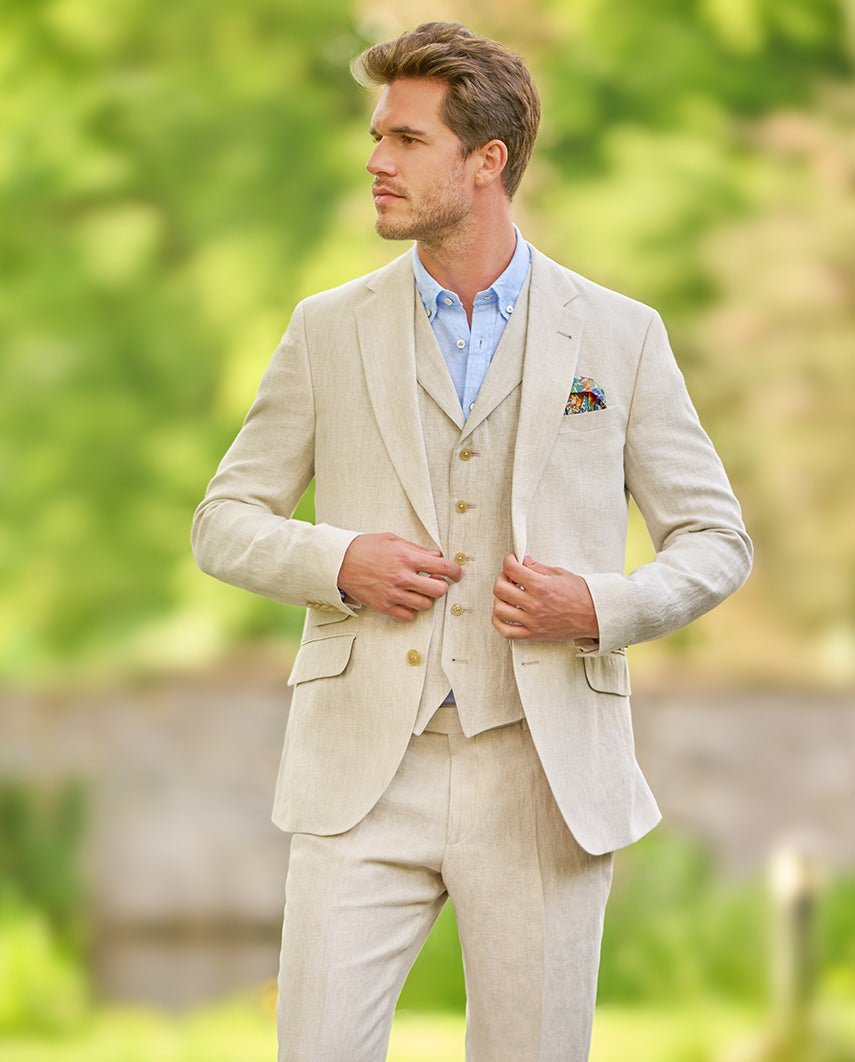
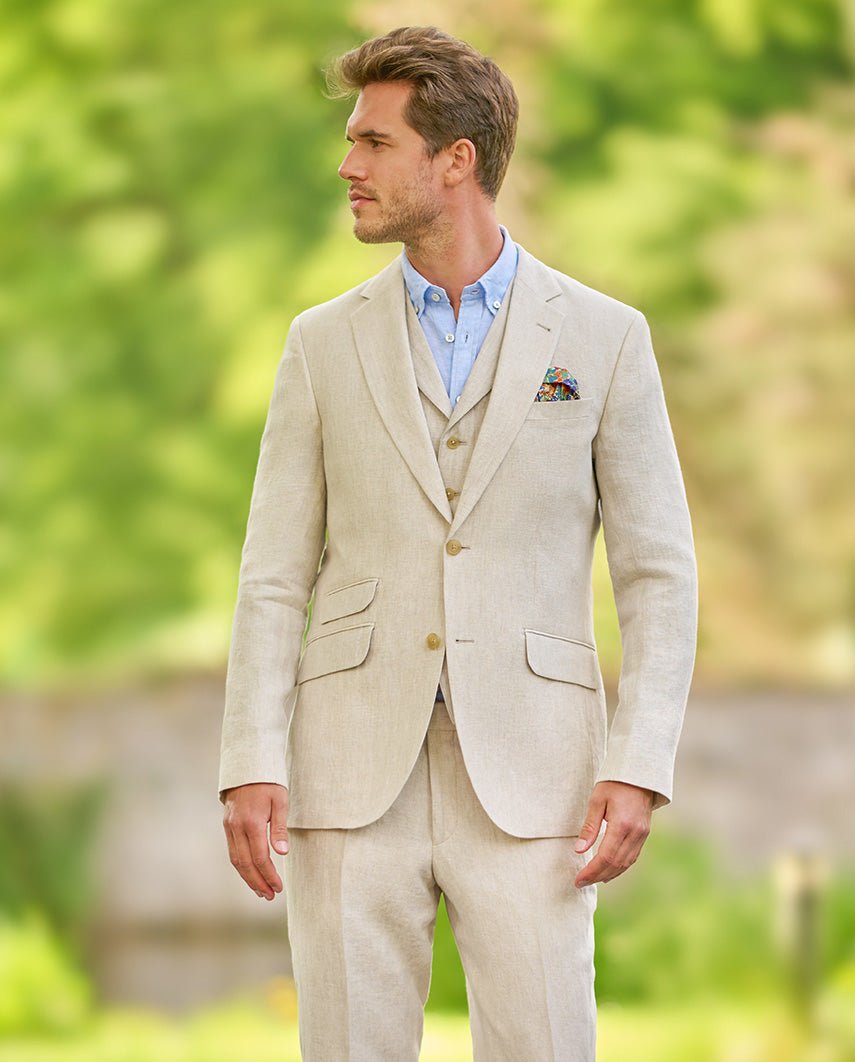
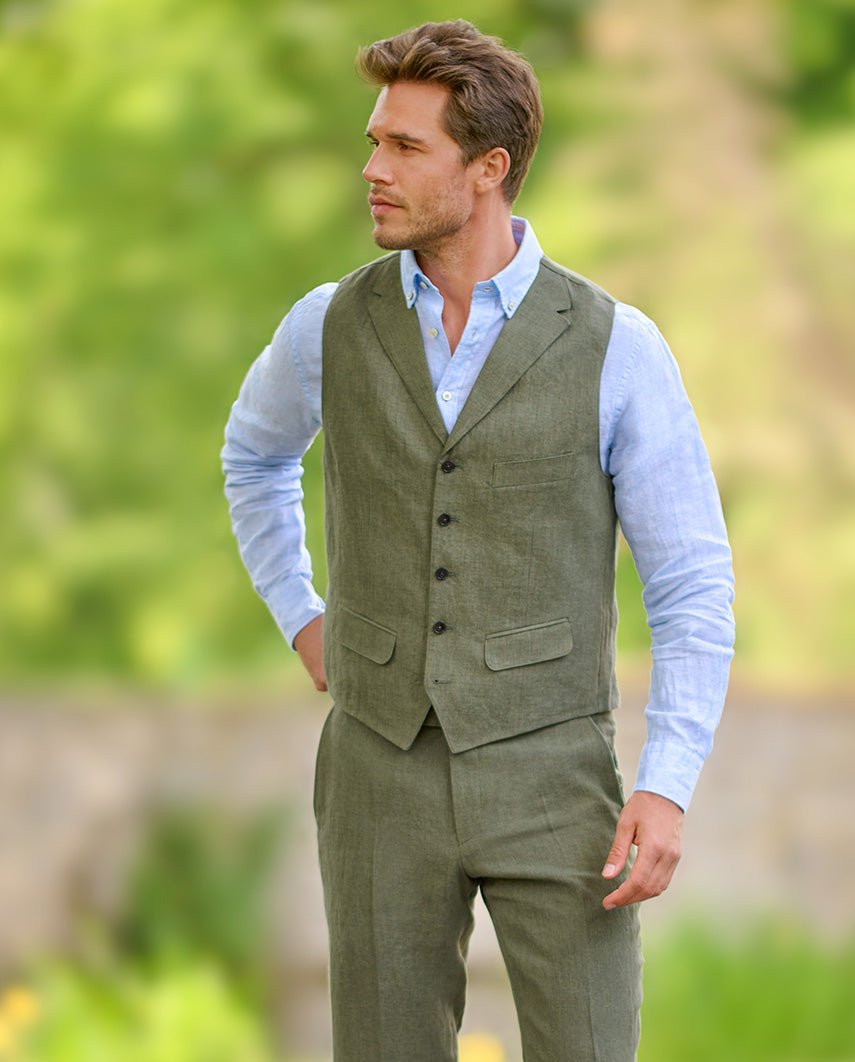
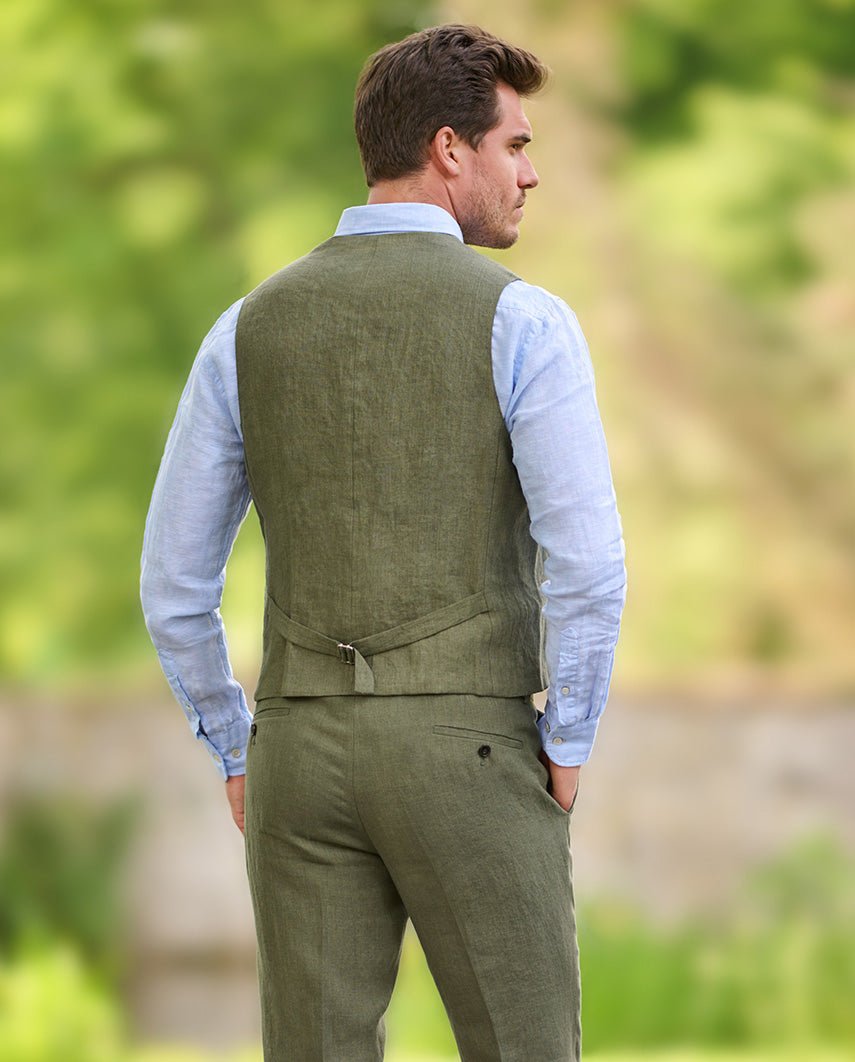
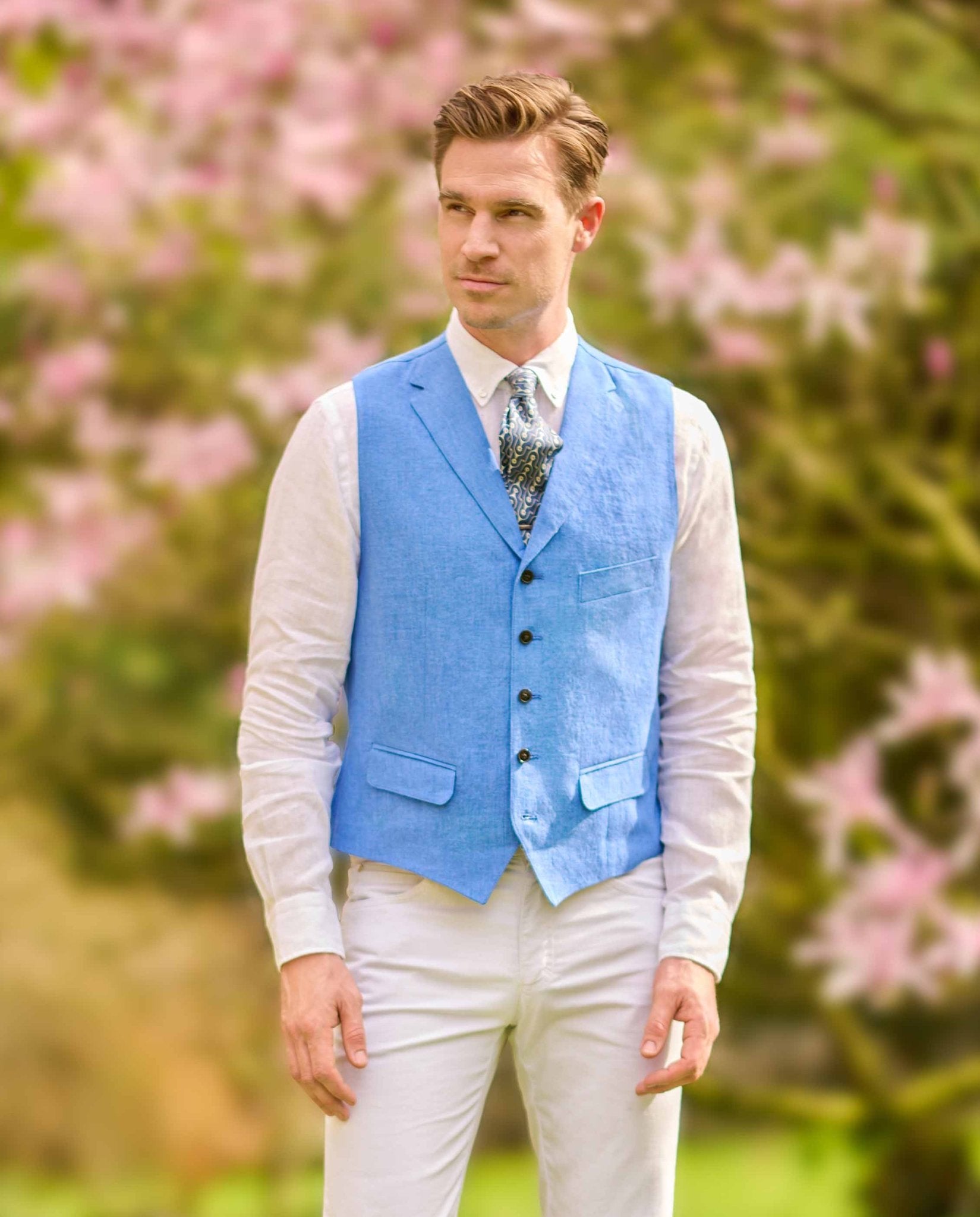
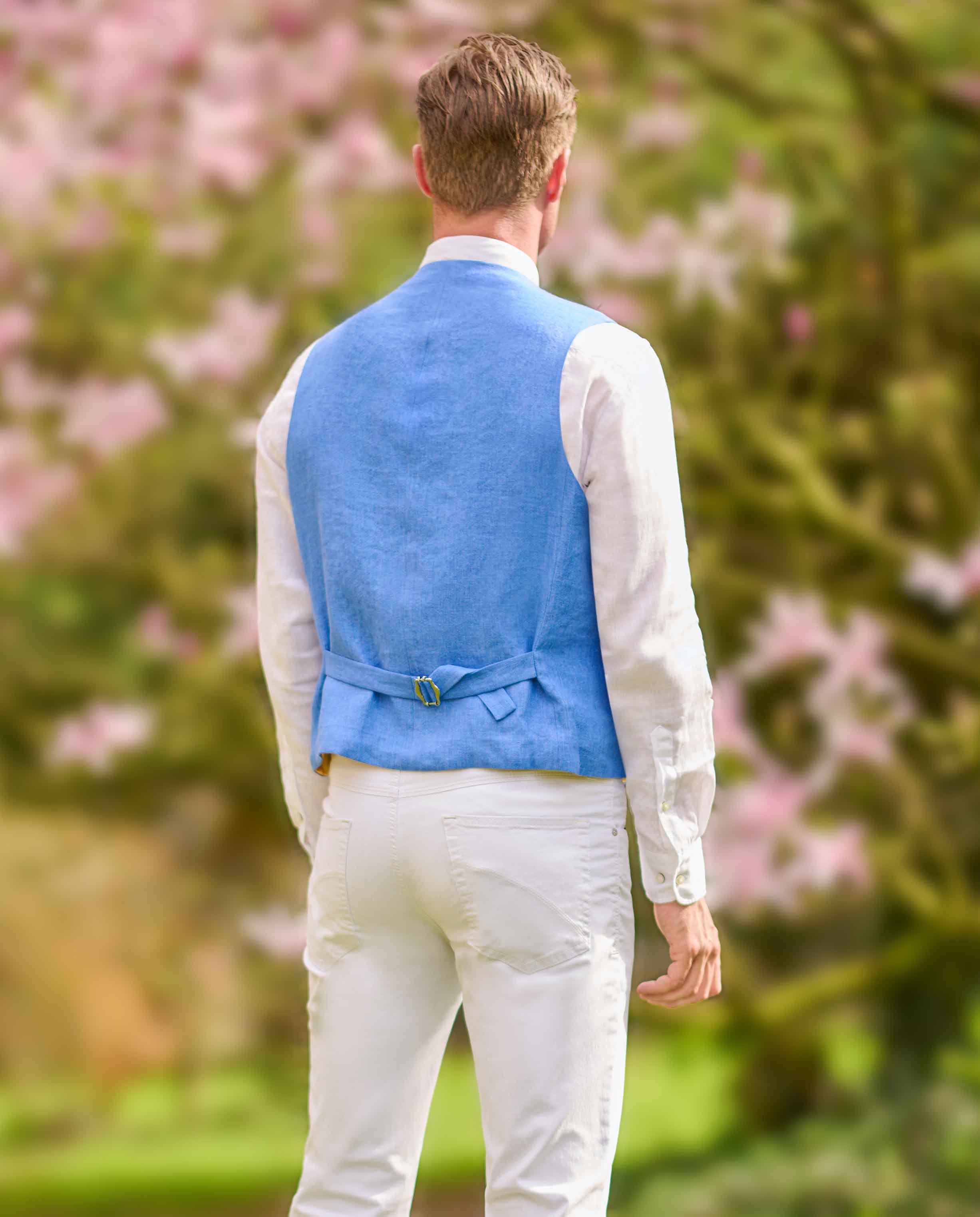
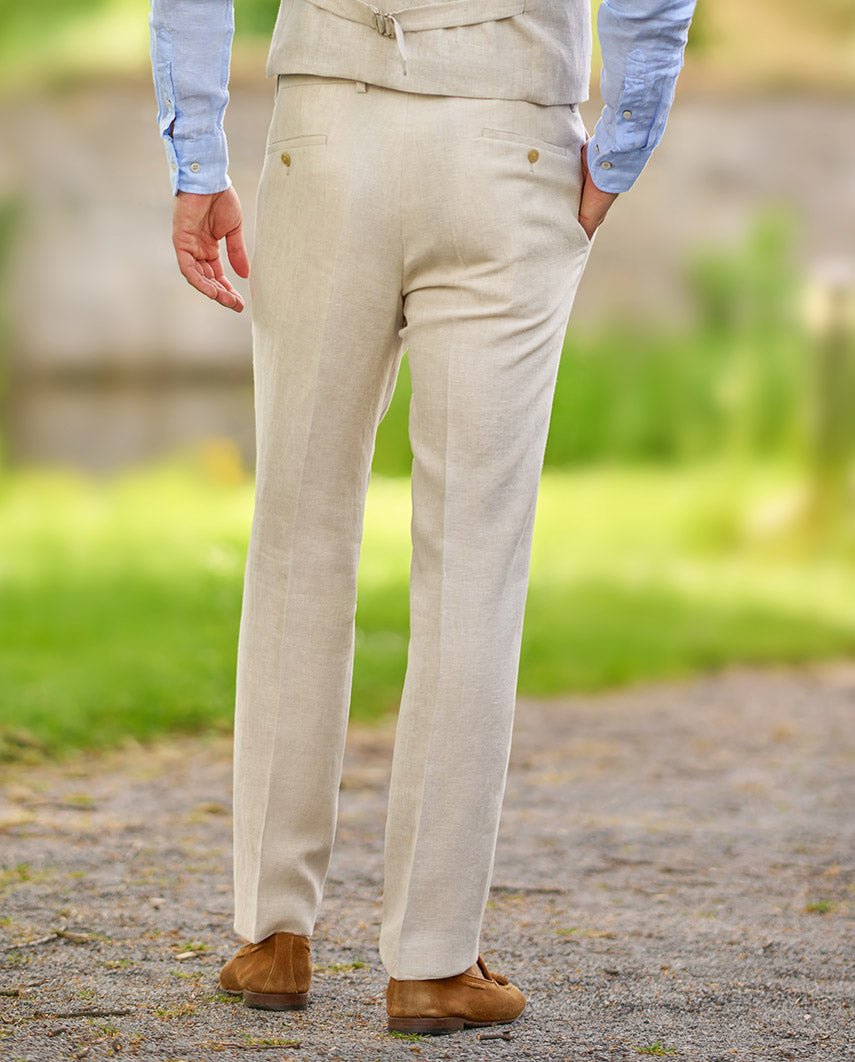
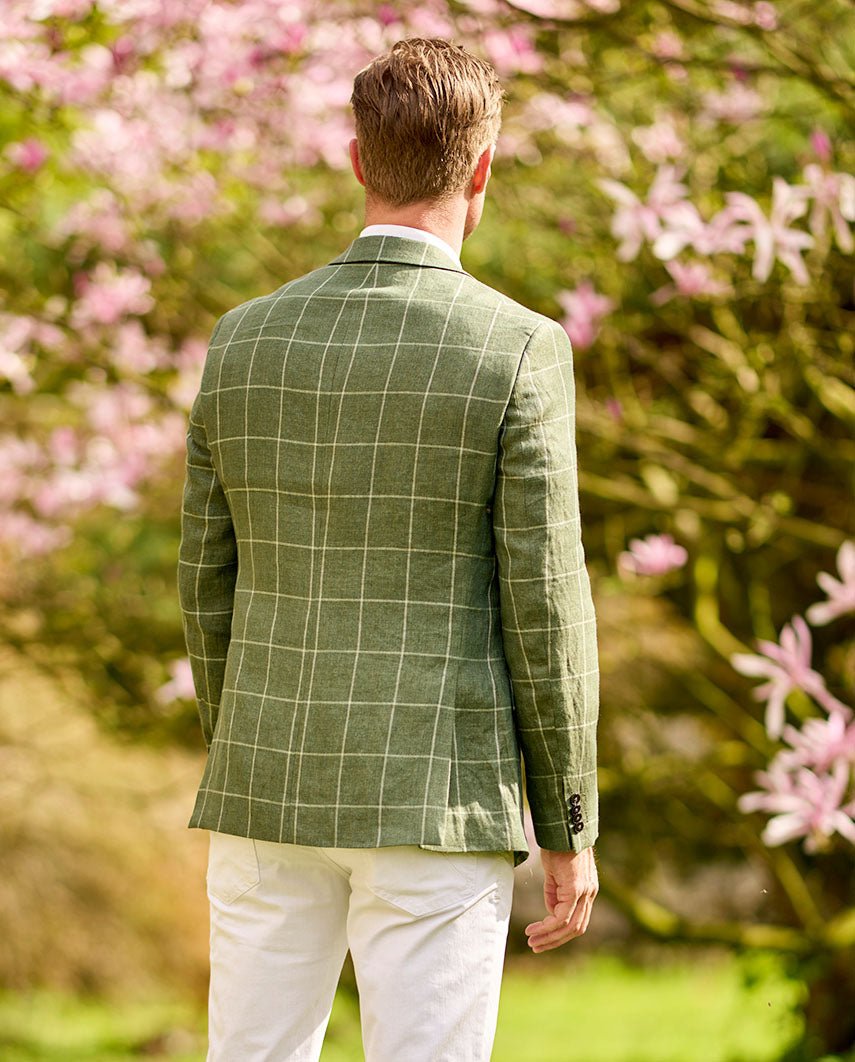
Linen is the classic fabric for the warm season. For men, a linen blazer with light linen trousers or linen chinos makes for an airy summer combination. For women, a linen blazer adds a light, valuable accent. In muted natural tones such as beige, sand, navy, and olive, linen calmly integrates into a timeless wardrobe.

elegant linen blazer 'Carola' in beige windowpane check
Is Linen Sustainable?
Linen is considered a relatively resource-efficient fiber. The flax plant typically requires little water and often little pesticide. In addition, pure linen is biodegradable. Combined with the durability of a well-made linen piece, this is a material profile that fits well with a wardrobe focused on longevity.
Linen Fashion from Wellington of Bilmore
Wellington of Bilmore features linen fashion as a permanent part of its spring and summer collection, including linen blazers, linen trousers, and linen suits. The pieces combine the light, cooling material with careful craftsmanship in a British-inspired style.
Frequently Asked Questions about Linen
What is linen?+
Linen is a natural fiber from the stem of the flax plant. From the long bast fibers, a yarn is spun, from which the linen fabric is made.
What is linen made from?+
Linen is made from flax, a plant fiber. It is a pure natural fiber without synthetic components.
How do you wash linen?+
Wash linen on a delicate cycle at about 30 to 40 degrees with a mild detergent, turned inside out. Do not wring and dry in shape.
Does linen shrink when washed?+
Pure, unwashed linen can shrink slightly if washed too hot. Shrinkage is minimal at low temperatures and with pre-washed items.
How do you iron linen?+
Iron linen when slightly damp on the linen or cotton setting, ideally from the inside out. This helps smooth wrinkles and avoid shiny spots.
Can linen be tumble dried?+
Only if the care label permits and then at a low temperature. Too much heat can shrink linen, so air drying is gentler.
Why does linen wrinkle?+
The linen fiber is not very elastic and does not return to its shape after creasing. The wrinkles are part of the material's character.
Is linen sustainable?+
Flax usually requires little water and pesticides, and pure linen is biodegradable. Along with its durability, linen is considered a resource-efficient fiber.