
Key takeaways
Why Tweed Needs Special Care
Tweed is made from pure new wool, a living natural material with properties that hardly any synthetic fabric offers: wool regulates moisture, is naturally odor-resistant, and contains lanolin, the sheep's natural wax that keeps dirt at bay. These very properties make wool easy to care for yet sensitive to incorrect treatment.
Hot water, mechanical friction, and unsuitable cleaners destroy the fiber structure of wool. It felts, shrinks, and loses its elasticity. Too frequent ironing, excessively high temperatures, and improper storage can also damage a high-quality tweed jacket in the long run. Anyone who understands the peculiarities of the material can achieve a great deal with surprisingly little effort.
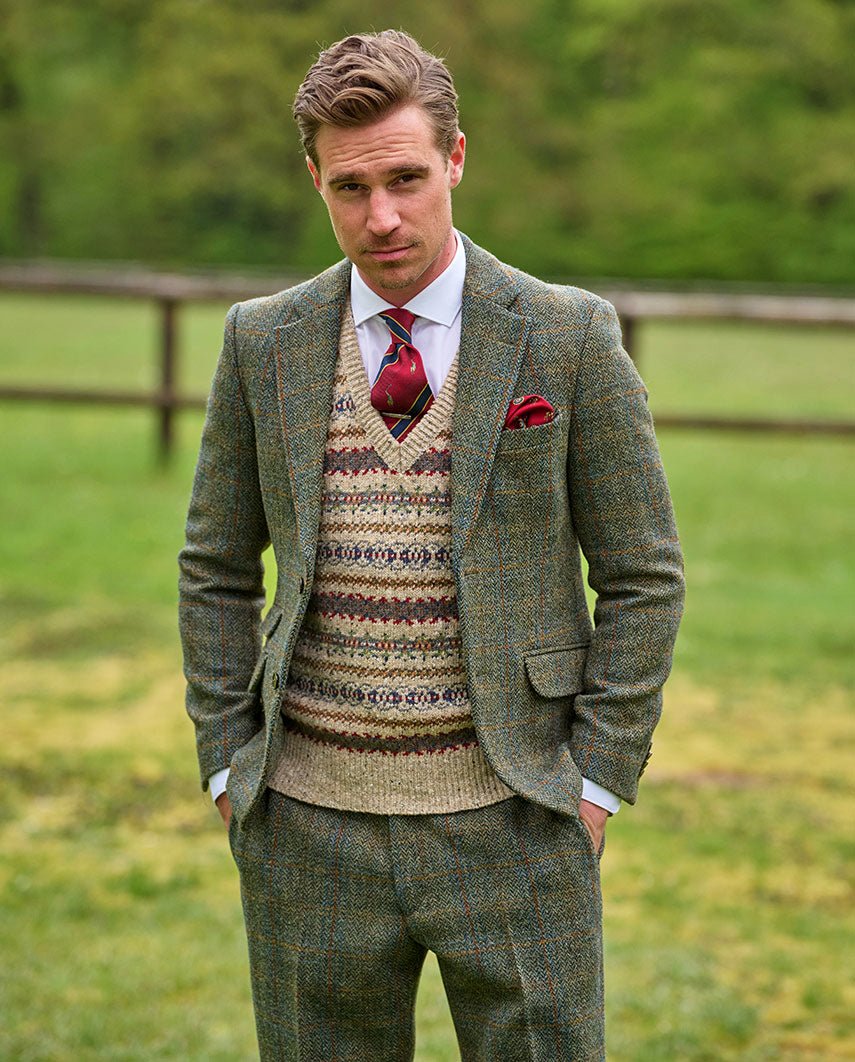
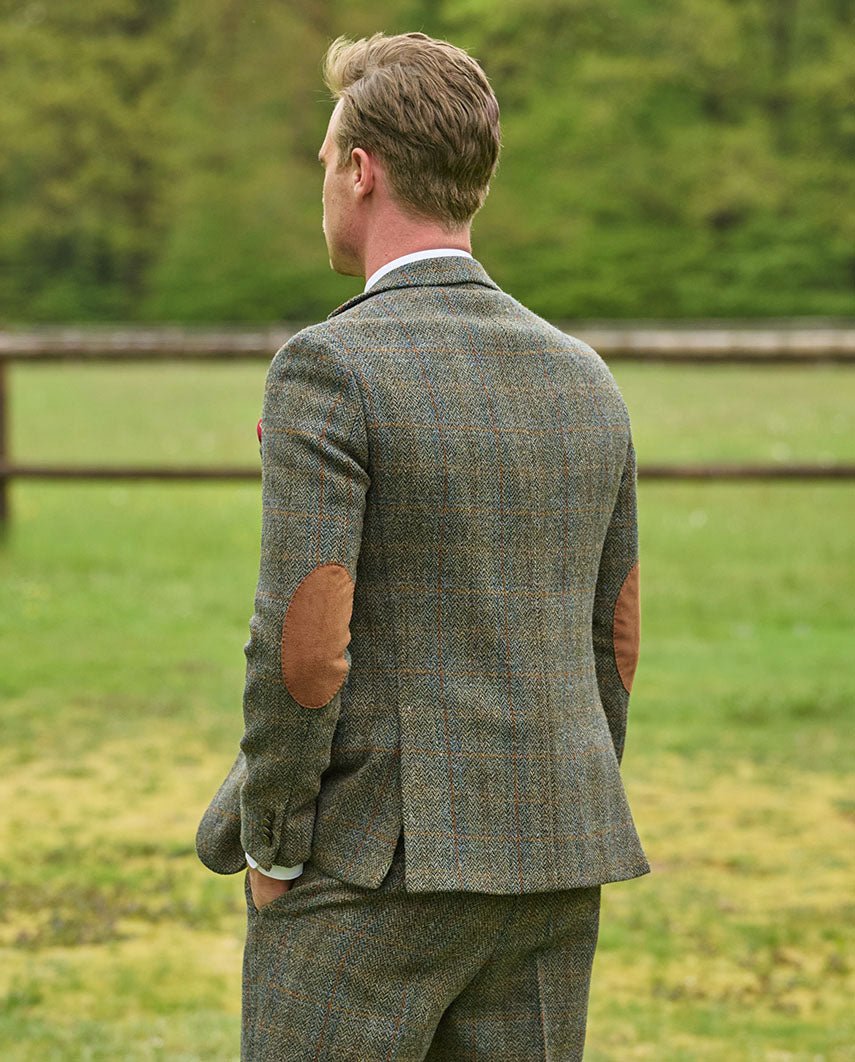
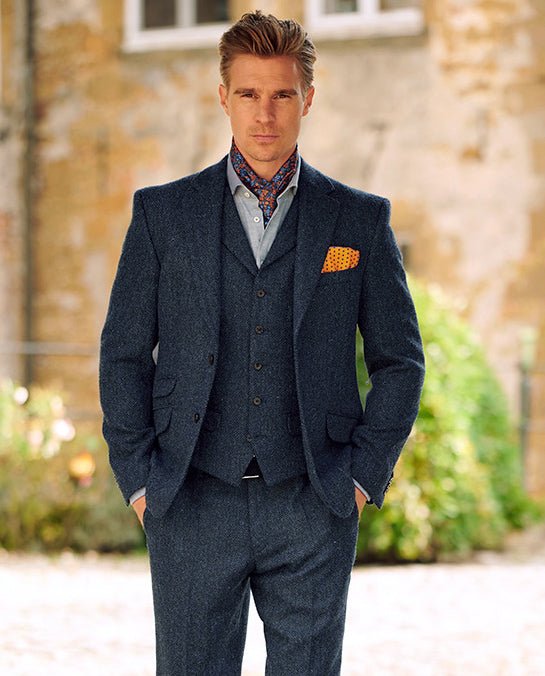
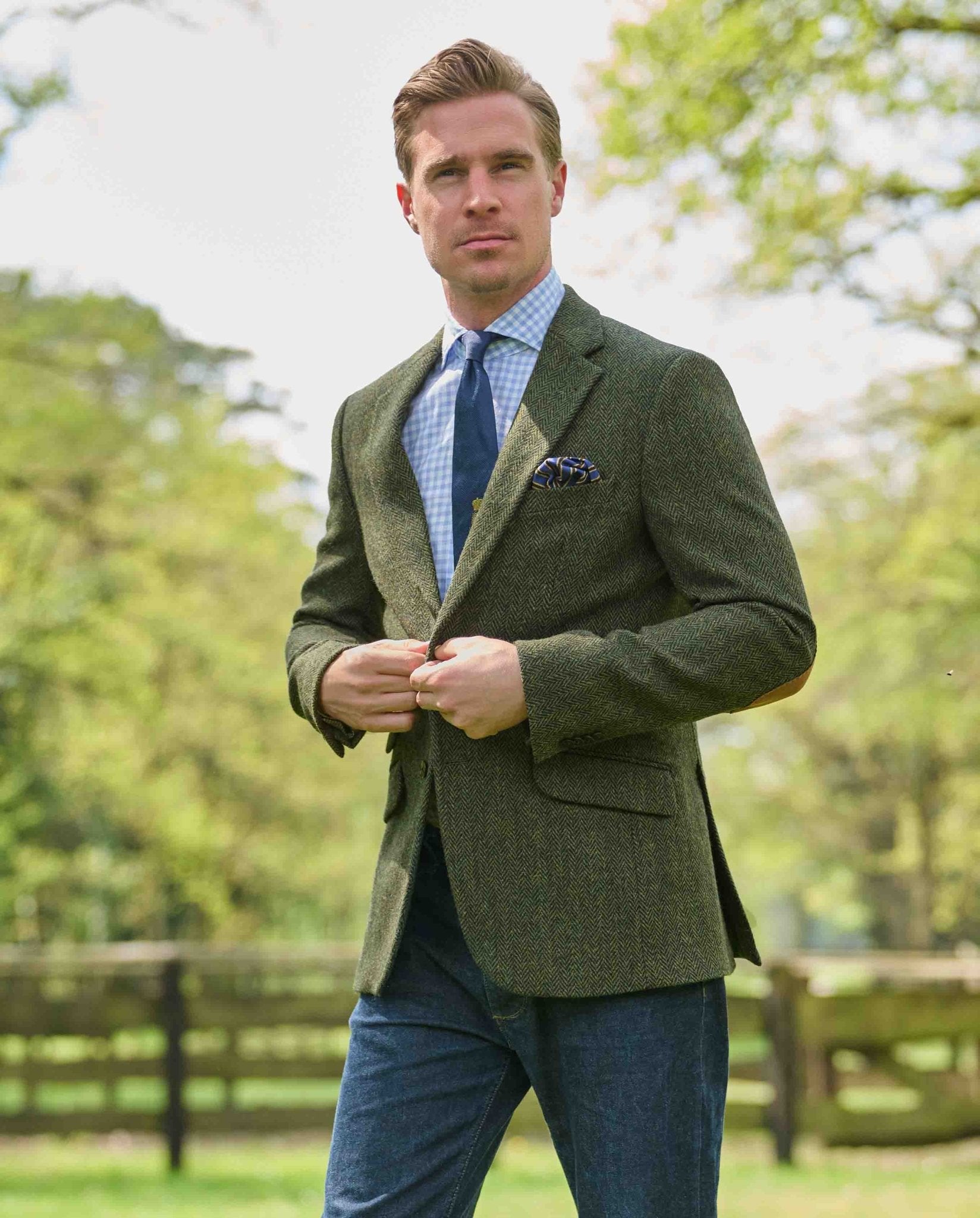
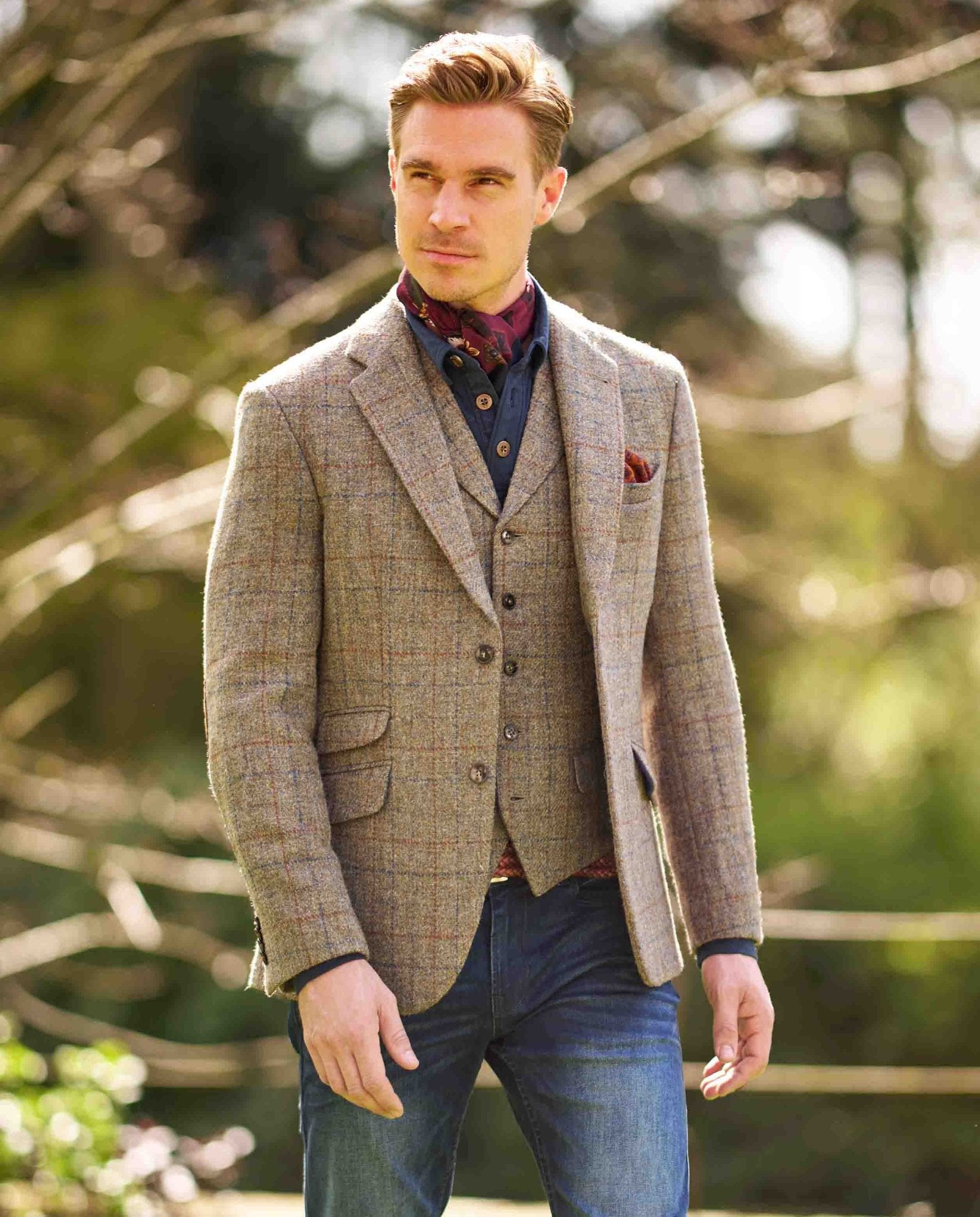
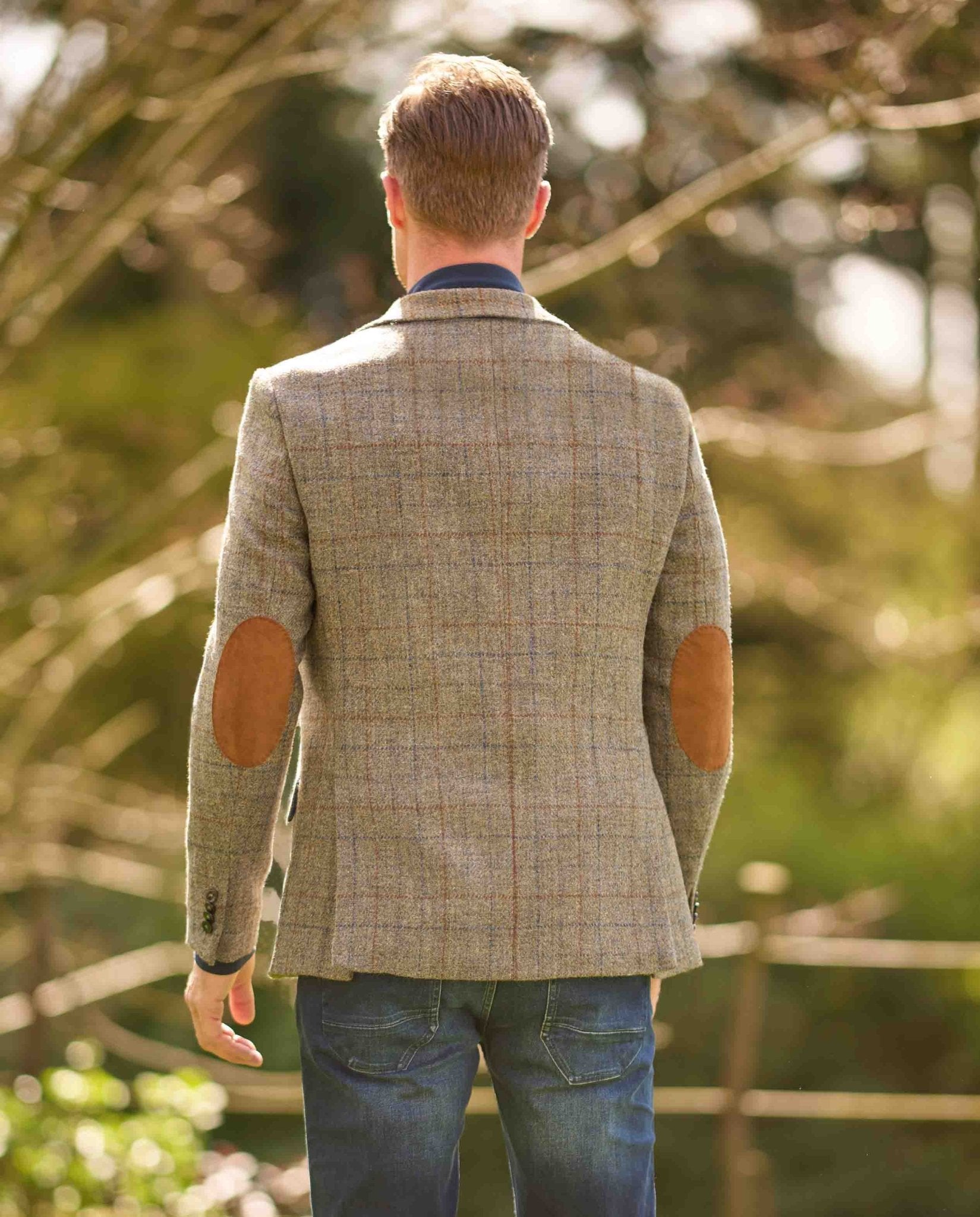
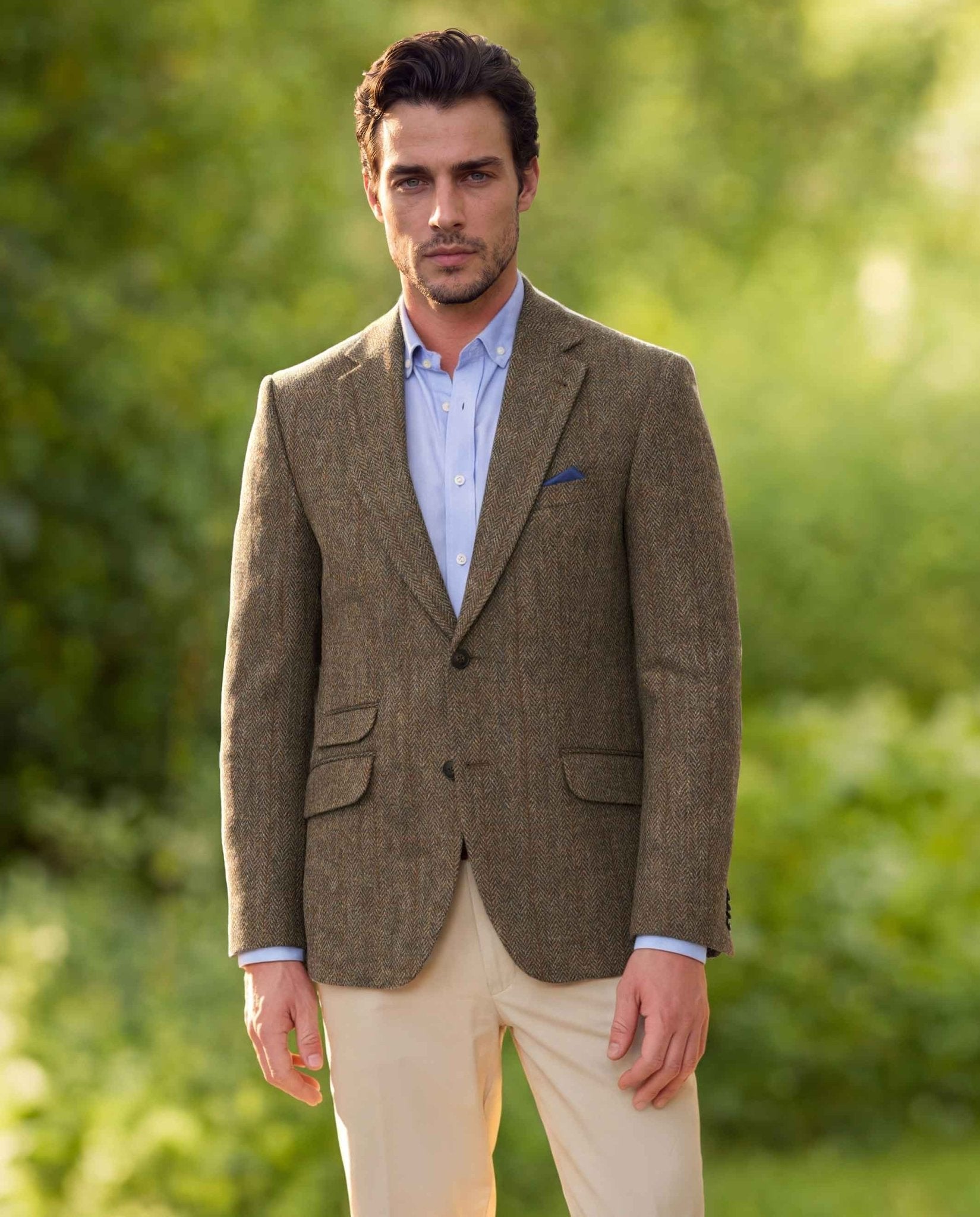
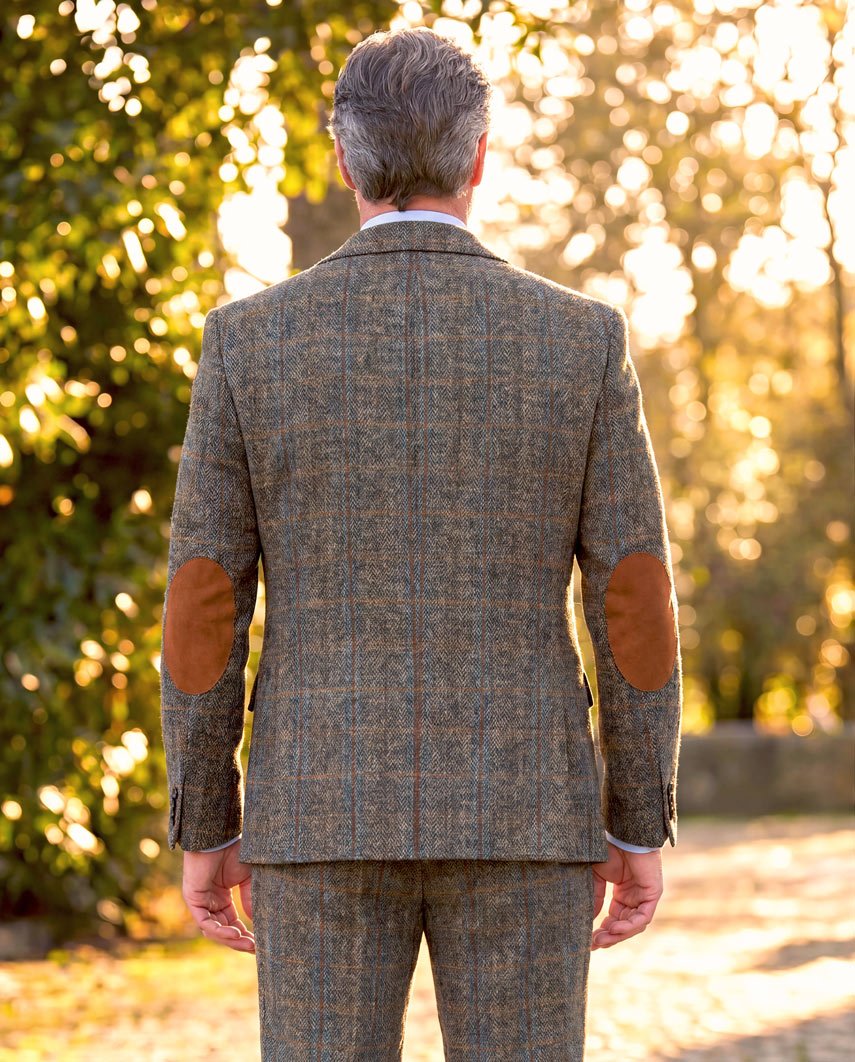
 Harris Tweed Jacket ''London'' in grey-cream houndstooth
Can a tweed jacket be washed in a washing machine?
The clear answer is: No. A tweed jacket does not belong in a washing machine. The drum's mechanics, water absorption, and fiber friction are highly likely to cause the fabric to shrink, felt, or lose its shape. In addition, a jacket consists of several layers of material: tweed outer fabric, lining, fleece interlining in the chest, and shoulder pads. These layers react differently to water, and a soaked jacket construction often distorts irreversibly.
Even hand washing is risky. Wool is highly sensitive to temperature changes and mechanical stress. If washing is necessary, for example, due to heavy soiling, professional cleaning should be chosen.
Daily Care for Tweed: Storing, Airing, Brushing
The most effective care takes place between wears. Three simple routines are enough to keep a tweed jacket in pristine condition for years.
Air, don't wash
After each wear, you should hang your jacket to air, ideally in a shaded, well-ventilated place, such as on a sturdy hanger in an open doorway or in front of an open window. Wool reversibly absorbs odors and releases them into the air. After airing for a few hours or overnight, odors from restaurants, events, or transportation will reliably be reduced. This method almost always replaces washing.
Hang on the right hanger
Use a wide, shaped wooden hanger for tweed jackets that supports the shoulder seam. Wire hangers or overly narrow plastic hangers will permanently deform the shoulder area. Do not hang the jacket too tightly in the wardrobe so that air can circulate and minor wrinkles can smooth out.
Care with a clothes brush
A good clothes brush is the most important care tool for tweed. Gently brush the jacket in the direction of the fabric's nap after each wear, from top to bottom. This removes dust, loose fibers, hair, and fine dirt before they can penetrate deeper into the fabric. A natural hair brush with soft, long bristles is the right choice because it protects the material while effectively cleaning it.
Treating stains: what works and what doesn't
Stains are inevitable. The key is how quickly and gently you react. Three basic rules apply to every tweed stain.
Act immediately. Fresh stains can almost always be removed. Dried stains are a much more difficult case. Therefore, keep a clean white cotton cloth in your luggage when wearing a high-quality jacket.
Dab, don't rub. Rubbing pushes the stain deeper into the fabric and can roughen the weave. Instead, gently dab from the outside in to prevent the stain from spreading.
Dry before wet. Solid components like crumbs, dust, or dried residue can often be removed with a clothes brush. Only if that doesn't help should a slightly damp cloth be used, ideally with clear, cold water. Cleaning agents, solvents, or stain removers belong in the hands of a professional cleaner, not on delicate tweed outer fabric.
Important professional tip: Test cleaning agents in an inconspicuous spot
If you do apply a cleaning agent yourself, always test it beforehand in an inconspicuous spot, such as on an inner seam, a cuff, or the inside of a sleeve opening. Tweed fabrics react differently to cleaners; some colors may bleed, while other fibers may develop shiny spots. Only if the agent shows no change after several minutes in the invisible spot is it safe for the visible fabric area.
Having a tweed jacket professionally cleaned: when and where
Even with good daily care, a tweed jacket occasionally needs professional cleaning. This is advisable once a year, for example, at the end of the tweed season, as well as for significant soiling, stubborn stains, or strong odors.
What to look for when choosing a dry cleaner
Choose a dry cleaner with experience in treating high-quality wool fabrics and preferably one that mentions tweed or classic tailored clothing. Before dropping it off, explicitly inform the staff about the material and, if necessary, any particular areas or stains. High-quality dry cleaners often use gentle processes, such as dry cleaning with a special wool program, and are familiar with the characteristics of classic tailored materials.
What professional cleaning costs
The cost of cleaning a tweed jacket ranges between 12 and 25 euros per item, depending on the region and provider. For a high-quality jacket that cost several hundred euros and will be worn for many years, this is a very worthwhile investment.
Ironing and shaping tweed: if at all
Tweed generally does not need to be ironed. The robust weave and wool fiber ensure that light wrinkles fall out on their own if the jacket is allowed to hang on a hanger between wears. If you still want or need to iron, you should observe a few rules.
Steam instead of direct contact
The gentlest method is steaming with a wool steam iron or a steamer, without direct contact between the soleplate and the outer fabric. The hot steam smooths the wool fibers and releases light wrinkles without pressing the material or flattening the typical tweed structure.
Use an ironing cloth
If direct ironing is necessary, always place a thin, clean ironing cloth made of cotton or linen between the iron and the tweed. This protects the surface from direct heat and from the typical shine that hot iron soleplates can leave on wool.
Temperature: wool setting
The correct temperature corresponds to the wool setting on your iron, usually two dots or about 110 to 130 degrees Celsius. Higher temperatures are unnecessary and can damage the fiber.
Alternative: Steamer
A garment steamer is often a better choice for tweed than a classic iron. It smooths without pressing and leaves the typical fabric structure untouched. For regular tweed wearers, purchasing one is worth considering.
Seasonal storage and moth protection
Those who primarily wear tweed jackets in autumn and winter store them over the summer. Three steps ensure that the jacket is ready for use again in autumn.
Clean before summer break
Have the jacket professionally cleaned before storing it, or brush it very thoroughly. Food residues, skin particles, and sweat marks attract moths, even if they are invisible to the human eye.
Breathable garment bag, no plastic
Store the jacket in a breathable fabric bag, not plastic. Wool needs air. In airtight plastic bags, moisture can accumulate and, in the worst case, cause mildew or mold.
Moth protection with natural remedies
Cedar wood and lavender are proven moth repellents. They are not as aggressive as chemical insecticides but reliably keep moths away. Refresh the remedies every three to six months, as their scent diminishes over time.
In autumn: air out briefly
When the tweed season begins, take the jacket out of storage one day before the first wear, hang it to air, and give it a thorough brushing. This way, it's ready for use without the typical smell of summer storage.
Harris Tweed in particular: Value retention of an investment piece
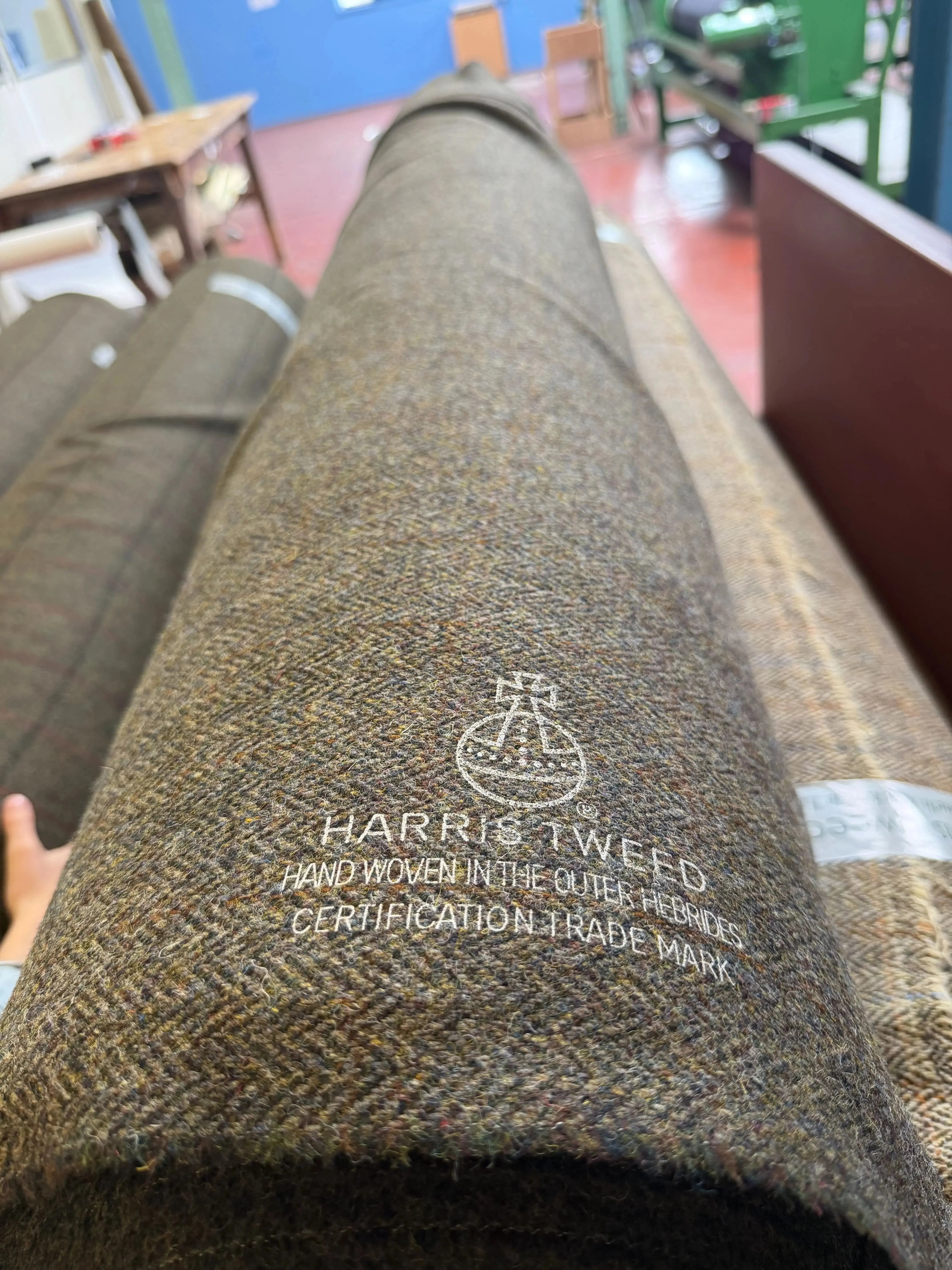
Original Harris Tweed is particularly robust due to its material composition and weave. The hand-woven structure, dense new wool, and multi-colored yarn dyeing make Harris Tweed a fabric that, with good care, will last several decades without exaggeration. Many Harris Tweed jackets are inherited, worn, refurbished, and re-sewn. The patina that tweed develops over the years is not considered a defect but a sign of quality: it is visible proof that the piece accompanies its wearer through life.
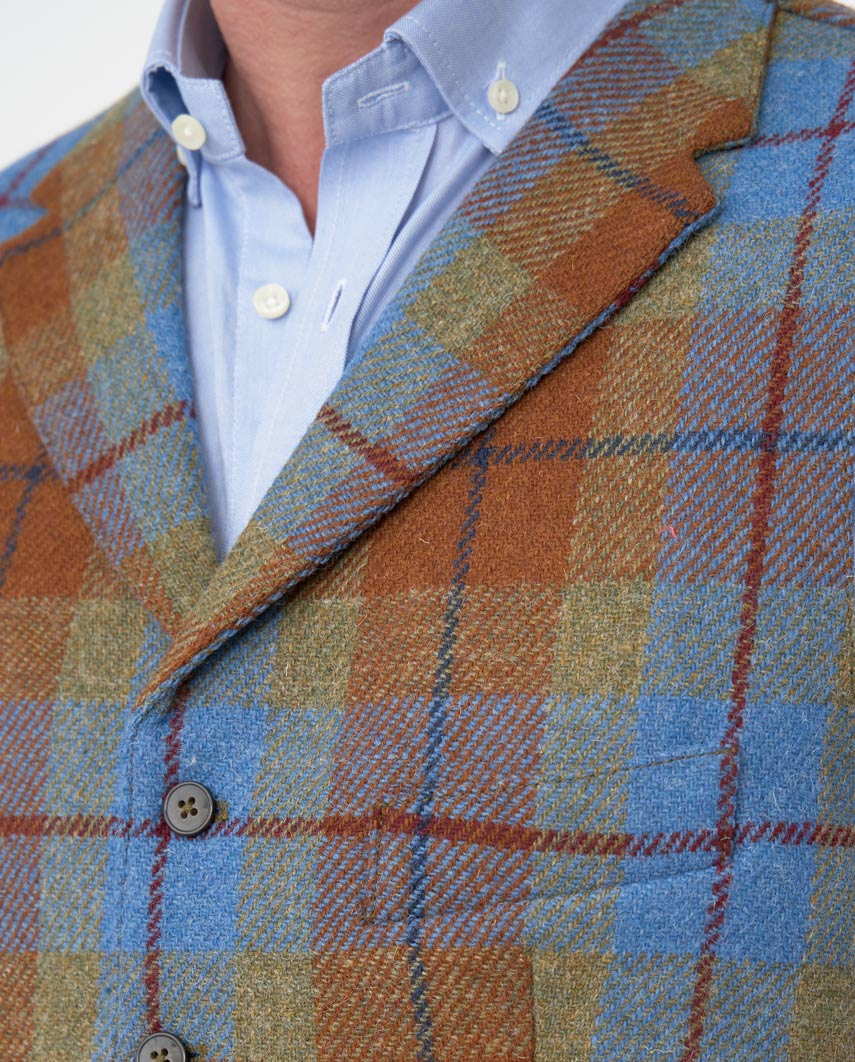
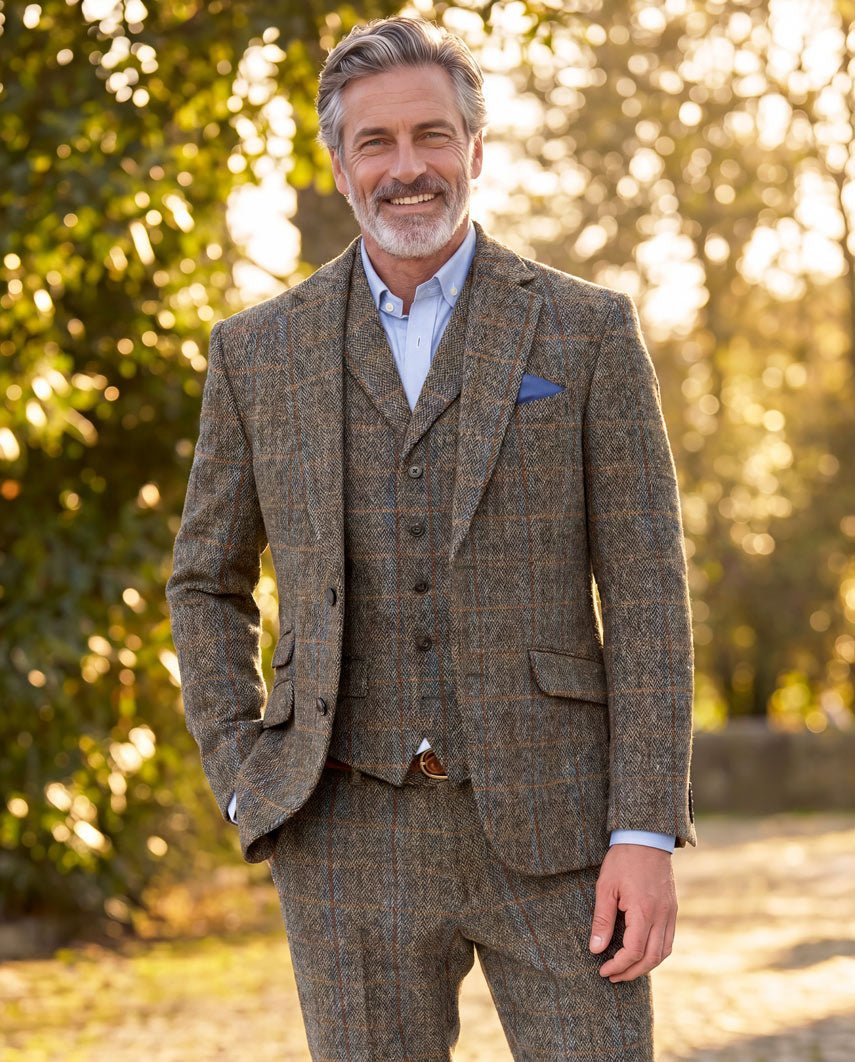
For minor damage, such as an opened seam or a loose button, repair is almost always worthwhile. A skilled seamstress or a good tailor can still achieve a lot even after years, especially with a high-quality base material like Harris Tweed. Harris Tweed Jacket ''London'' in Gold Tartan
Investment pieces from Harris Tweed at Wellington of Bilmore
A high-quality Harris Tweed jacket is an investment for decades and a companion with its own character. At Wellington of Bilmore, you will find original Harris Tweed with an official authenticity label, made according to classic cuts and tailored for the modern gentleman and cultured lady. Discover our Harris Tweed collection for men and women with jackets, blazers, coats, vests, and matching accessories.
Frequently asked questions about jacket care
How can I wash a jacket?
Classic jackets made of wool, tweed, or blended fabrics should generally not be washed yourself. The multi-layer construction of outer fabric, lining, and interlining cannot withstand water or machine mechanics. The correct approach is: regular airing, brushing after each wear, immediate stain treatment with a slightly damp cloth, and professional cleaning for significant soiling. If washing is still necessary, choose professional dry cleaning, not the machine.
Can I wash a suit in the washing machine?
A classic suit made of wool or tweed does not belong in the washing machine. The jacket and suit trousers consist of several layers of material that react differently to water and mechanics. The result is deformation, shrinkage, and a distorted silhouette. Instead, have the suit professionally cleaned, ideally the jacket and trousers together, so that color and finish remain identical.
Can a jacket be washed in the washing machine?
No. A classic jacket, especially one made of tweed or wool, does not belong in the washing machine. The material layers react differently to water and mechanics. Instead of washing, clean; instead of washing, air; and for significant soiling, take the jacket to a professional cleaner.
How often should a jacket be cleaned?
A regularly worn tweed jacket only needs professional cleaning once a year, ideally at the end of the season. For less frequent wear, a two-year interval may be sufficient, provided there are no visible stains or odors.
How much does professional jacket cleaning cost?
The cost ranges between 12 and 25 euros per jacket, depending on the region. Special cleaning with particular procedures or additional stain treatment may cost more.
How do I remove stains from tweed?
First, treat dry stains with a clothes brush. Gently dab wet stains with a slightly damp white cotton cloth; do not rub. Always test cleaning agents on an inconspicuous area beforehand. For stubborn stains, do not experiment yourself but take the item to a professional cleaner.
Do you have to iron tweed?
No, ironing is usually not necessary. Tweed mostly smooths itself out on a hanger. If wrinkles remain, steaming with a steamer or carefully ironing with a cloth and on the wool setting is the correct method.
How do you store a tweed jacket over the summer?
Have it cleaned before storing, then keep it on a wide wooden hanger in a breathable fabric cover. Add cedarwood or lavender as a natural moth repellent. Avoid plastic bags.
How do I care for my Harris Tweed jacket?
Caring for Harris Tweed follows general tweed care rules: ventilate, brush, treat stains, and have it professionally cleaned once a year. Harris Tweed is robust and develops a characteristic patina over time, which enhances its value rather than diminishing it.