
Key takeaways
What defines tweed patterns: weave, yarn, and coloring
Tweed patterns emerge from the interplay of three factors: the weave, the yarn dyeing, and the arrangement of the yarns during the weaving process. The foundation is almost always a twill weave, a diagonal weave in which the weft threads pass over the warp threads in a two-to-one ratio. This weave gives tweed its typical diagonal structure, even if the patterned end result can look very different.
Crucial to the effect is the yarn dyeing. While industrially woven fabrics are often dyed only after weaving, classic tweeds have their yarn dyed before weaving. Frequently, several shades are twisted into one thread, which gives the fabric its characteristic depth and multidimensional effect. This method is called “yarn-dyed” in English and is why tweed appears vibrant even with subtle coloring.
Houndstooth pattern: Houndstooth and Pied de poule
The houndstooth pattern is one of the most iconic tweed patterns of all and appears under several names in German-speaking countries. "Hahnentrittmuster" and "Hahnentritt-Muster" are the German terms, "Houndstooth" is the English term, "Pied de poule" is the French term. All three refer to the same pattern.
How the pattern looks
Houndstooth is created by an alternation between two colors, usually black and white, in a regular arrangement. The result is small, overlapping squares with vertical and horizontal extensions at the corners, which appear right-angled and vaguely resemble a rooster's footprints, hence the German name. In English, one sees the "hound's tooth," in French, the hen's foot. The typical size of the individual pattern elements ranges from about two millimeters to several centimeters.

How it is woven
Houndstooth is created by a twill weave in a four-by-four arrangement: four threads in a light color alternate with four threads in a dark color, both in the warp and in the weft. This arrangement automatically produces the characteristic pattern. The size of the individual houndstooth elements depends on the yarn thickness and the weaving density.
Houndstooth and Pepita: similar, but not identical
Houndstooth and Pepita are often used synonymously in colloquial language. However, in textile technology, they are two related but different weave patterns. In classic houndstooth, the extensions at the corners of the checks run vertically and horizontally, i.e., at right angles. In the Pepita check, the checks are connected by fine, diagonal lines, and the pattern size is usually significantly smaller, typically under one centimeter. Both patterns look deceptively similar at first glance; the difference only becomes clear upon closer inspection.
History and Heritage
The houndstooth pattern originated in the Scottish Lowlands in the 19th century, where it was initially woven as a robust pattern for workwear. By the 1920s at the latest, the British aristocracy adopted the pattern for men's wardrobes, especially for jackets and suits. With Christian Dior's New Look collections from 1947, the pattern also found its way into women's haute couture. Since then, houndstooth has been an integral part of upscale wardrobes for both women and men and is considered a timeless classic of heritage fashion.
Combining houndstooth patterns today
Houndstooth is an expressive pattern and should be combined with calm, plain accompanying pieces. A black and white houndstooth jacket harmonizes with dark jeans, charcoal cloth trousers, or black corduroy trousers. For women, a houndstooth blazer best unfolds its effect with simple blouses or fine knit sweaters in natural tones. Those who wear houndstooth coats or skirts should ensure a reduced color palette in the rest of the outfit so that the pattern remains the focal point.
Glencheck (Glen Plaid, Prince of Wales Check)
Glencheck is one of the most elegant tweed patterns of all. In English-speaking countries, it is called "Glen Plaid" or "Prince of Wales Check," in German often simply "Glencheck" or "Glencheckmuster." Even if the terms carry slightly different nuances, in everyday language they almost always refer to the same pattern.
How the pattern looks
Glencheck is a checkered pattern that is built up from two layers. The base layer consists of small houndstooth sections arranged side by side, forming a dense, regular basic pattern. Over this base layer, larger check lines, in a contrasting color, structure the overall pattern. From a distance, Glencheck looks like a calm check; up close, the eye discovers the fine houndstooth structure that makes the pattern so multifaceted.

Origin: the Glenurquhart Valley
The name Glencheck is derived from the Glenurquhart Valley in the Scottish Highlands. In the 19th century, the estate owner Caroline, Countess of Seafield, had her own tweed pattern designed there for her gamekeepers and beaters to wear. The pattern was so successful that it quickly spread beyond the region.
Why “Prince of Wales Check”
The term "Prince of Wales Check" dates back to Edward VII, the Prince of Wales and later British King. He wore the Glencheck pattern so prominently in the second half of the 19th century that it became associated with his title in English-speaking countries. In a narrow sense, "Prince of Wales Check" refers to a specific Glencheck variant in which the larger check lines are in a third color, often light blue or red. In everyday language, however, "Glencheck" and "Prince of Wales Check" are used synonymously.
Glencheck in a modern outfit
Glencheck appears more understated and elegant than the expressive houndstooth pattern. A Glencheck jacket or suit is a classic for upscale business and formal wear and suits numerous contexts, from weddings to elevated office days. For women, the Glencheck blazer is a timeless piece that works equally well with jeans as with elegant cloth trousers or a pencil skirt. The fine check lines can be coordinated with individual accents from the outfit, for example, a matching tie, blouse, or flat cap.
Herringbone
Herringbone is, alongside houndstooth and Glencheck, the third major tweed pattern. In English, it is called "Herringbone." In German, both the spelling with an umlaut ("Fischgrätmuster") and without ("Fischgratmuster") are used.
How the pattern looks
The herringbone pattern consists of diagonally arranged V-shaped zigzags that alternate to the left and right. The result actually resembles the central bone of a herring or, depending on the scale, the arrangement of bricks in a wall. The size of the individual V-shapes can be very small, creating an almost solid color fabric effect from a distance, or large enough to clearly distinguish the pattern from several meters away.

Weave Explanation
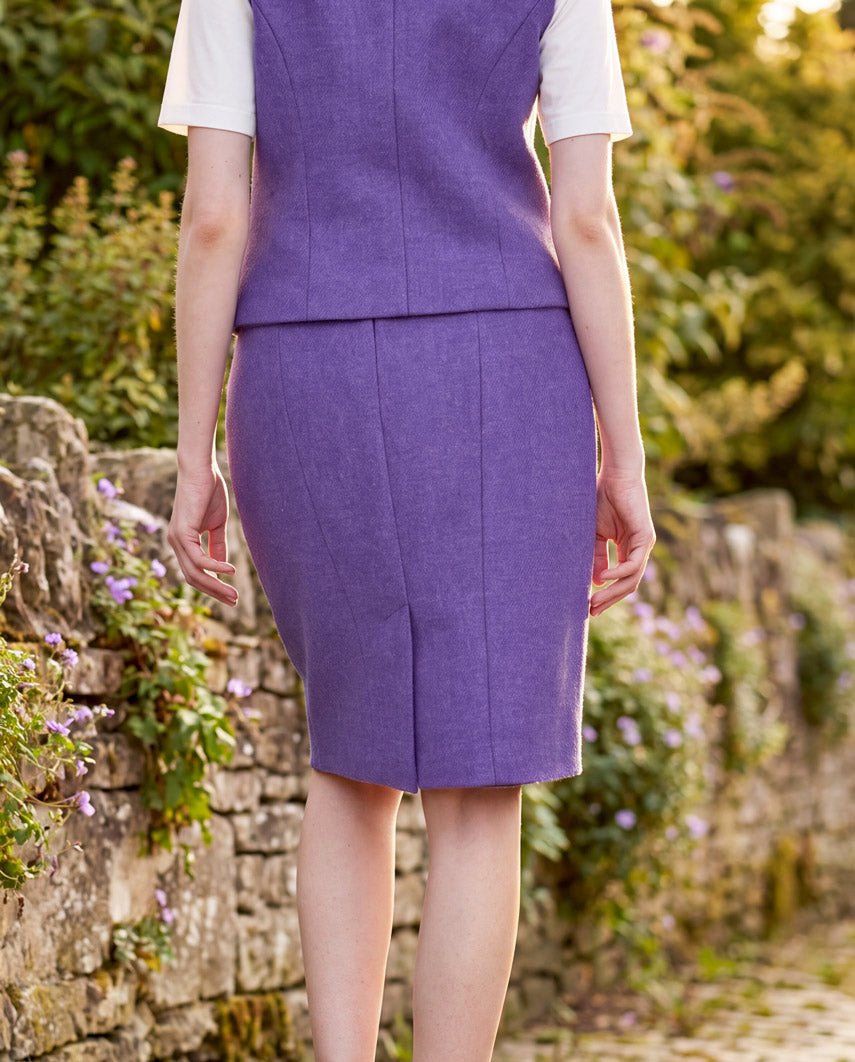
The herringbone pattern is created from a twill weave, whose diagonal direction is reversed at regular intervals. The constant alternation between left and right diagonals creates the characteristic V-pattern. This weave is one of the oldest of all and is found not only in tweed, but also in many other wool fabrics, suit fabrics, and even in cobblestones or parquet floors.
Heritage effect and use in fashion
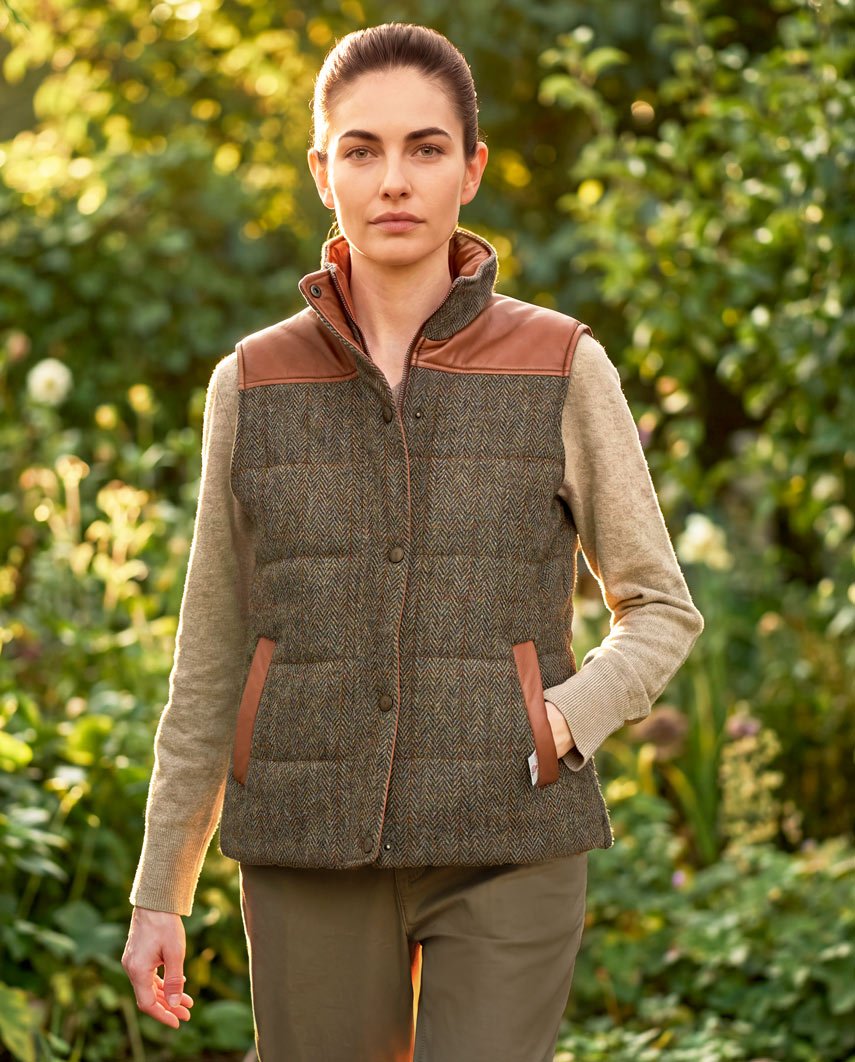
The herringbone pattern appears significantly calmer and more classic than houndstooth and Glencheck. It is suitable for jackets, coats, suits, and trousers that are intended to convey a restrained, professional impression in business or formal contexts. Those looking for a tweed jacket that can be combined in many ways and does not bring a strong individual character to the outfit will make the right choice with a herringbone tweed. At Wellington of Bilmore, herringbone is one of the most common patterns in the Harris Tweed range for jackets and coats.
Important note: Those who search online for "herringbone pattern" will quickly come across floor and wall coverings that are also laid in a herringbone look. This guide exclusively deals with the textile pattern for fashion.
Check patterns and Tartans
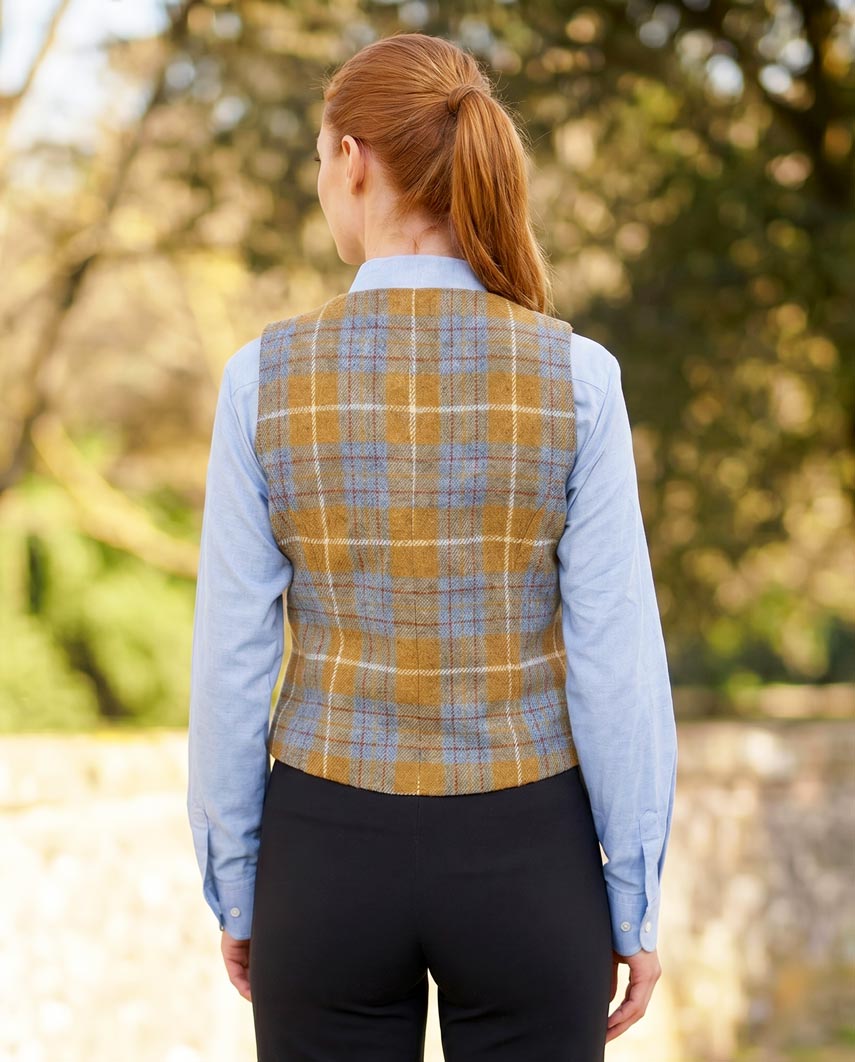
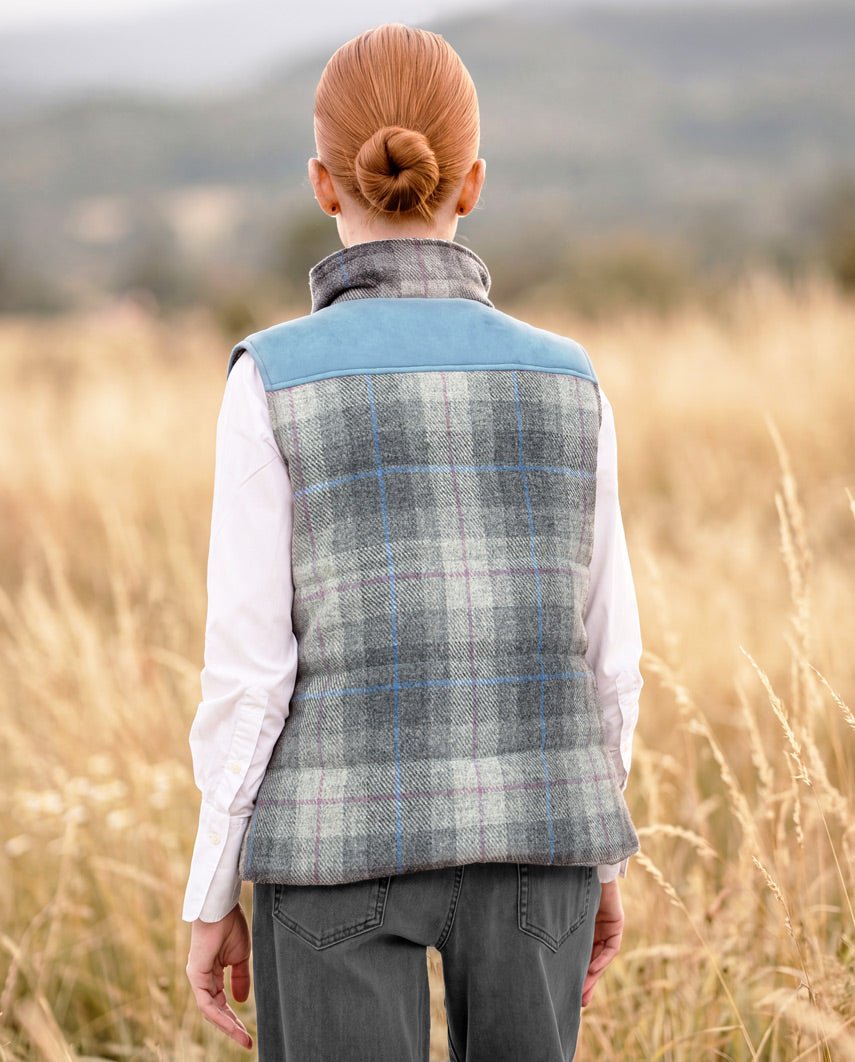
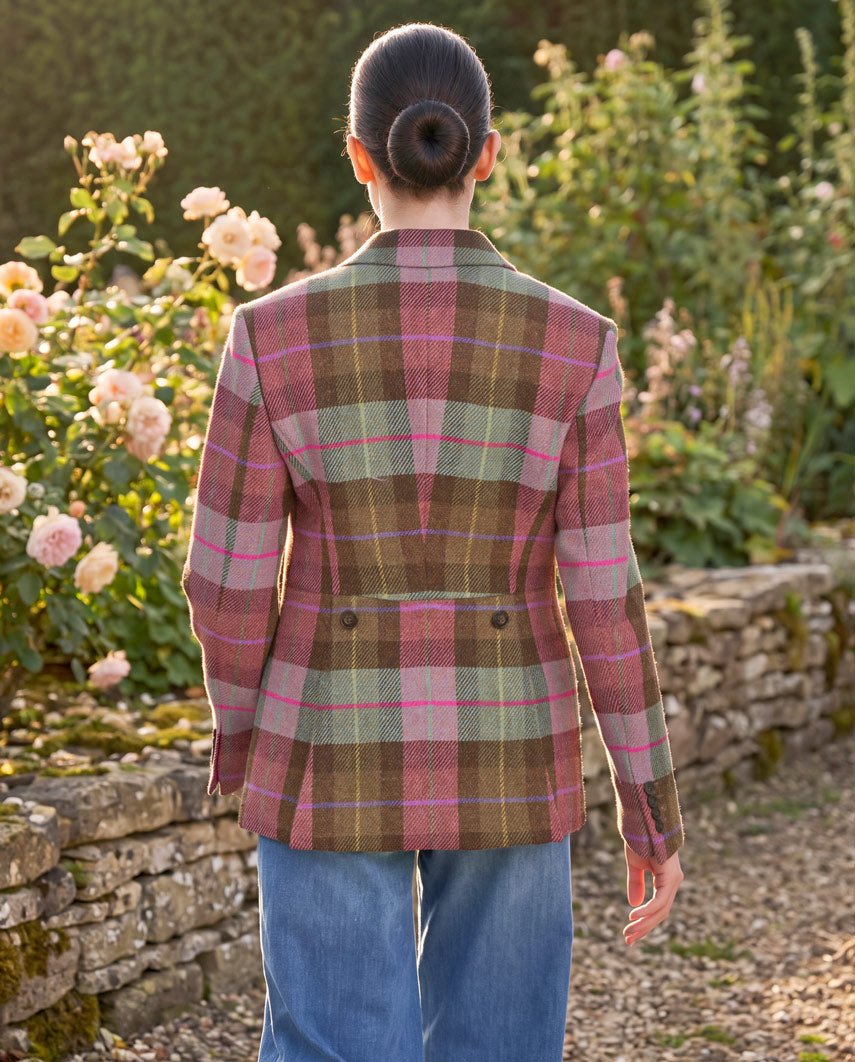
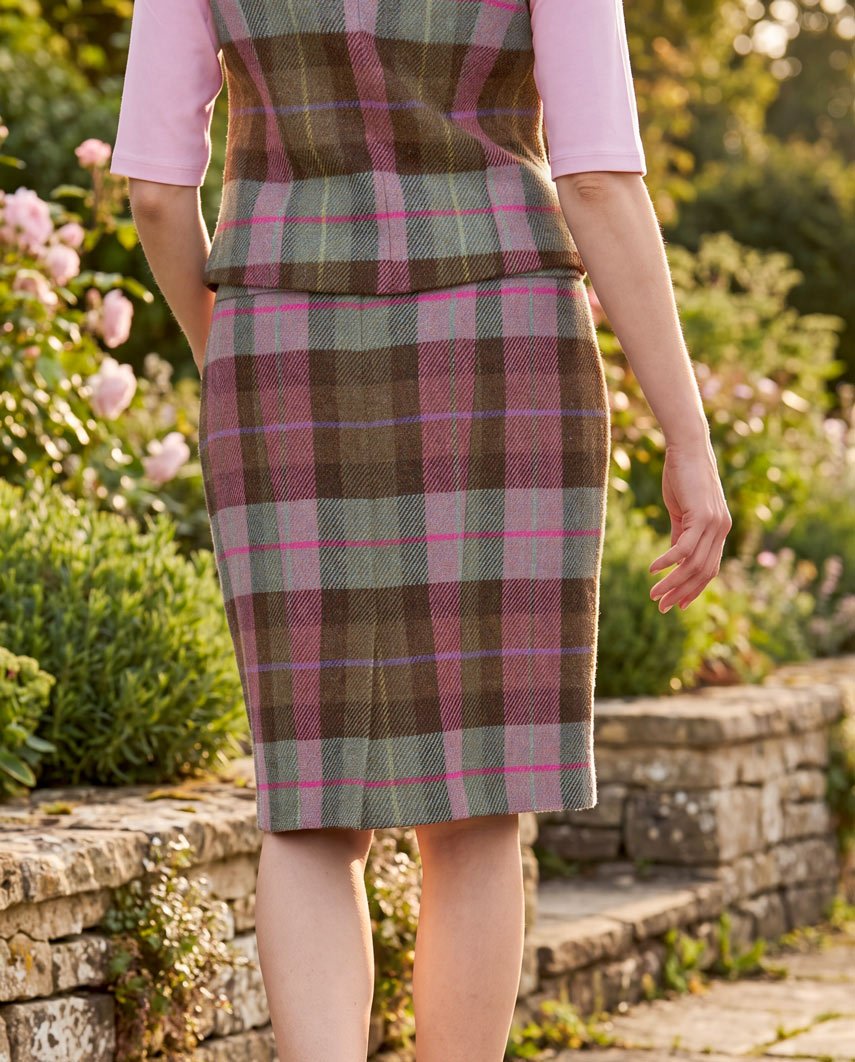
Check patterns in tweed are a world of their own. While Glencheck is one of the fine, layered checks, there is also an entire family of simpler, clearly structured check patterns, from subtle two-tone checks to traditional Scottish tartans.
Scottish Tartans
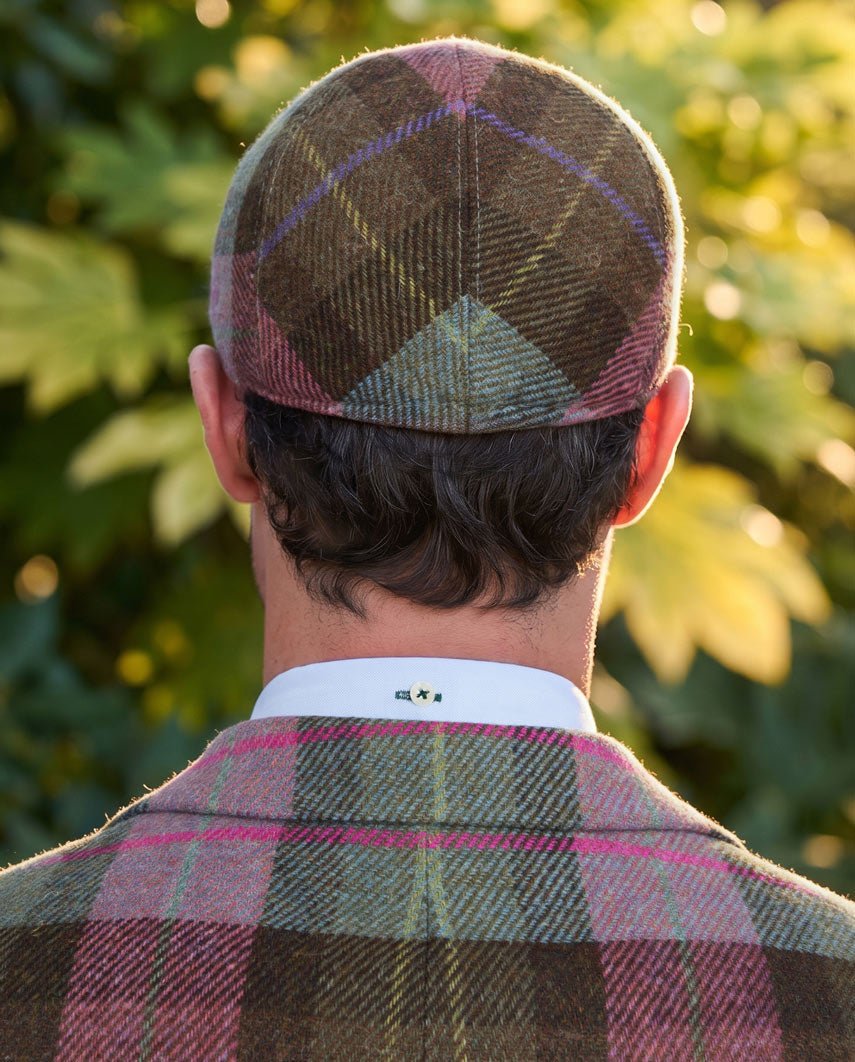
Tartans are clearly defined plaid patterns historically linked to Scottish clans and regions. Each clan has its own tartan design, registered in an official database of the Scottish Register of Tartans. In modern tweed assortments, classic tartans like Black Watch (dark blue, dark green, black), Royal Stewart (red with white and black lines), or Hunting Stewart (muted greenish) can be found. For jackets and suits, traditionally subdued tartans are preferred, while flashy variants are more commonly used for flat caps, waistcoats, and ties.
Check, Plaid, and Tartan: terms compared
In English usage, "Plaid" and "Check" are subtly distinguished. "Plaid" usually refers to classic Scottish checks with clan associations, while "Check" is a more general term for any type of checkered pattern. In German, "Karo" (check) is the most common collective term. Such subtle differences are not crucial in everyday life but help in understanding English-language product descriptions.

Barleycorn and Salt-and-Pepper
Besides the big three tweed patterns, there are a number of calmer, almost solid-colored patterns that derive their effect from the fabric structure. Barleycorn and Salt-and-Pepper belong to this family.
Barleycorn
Barleycorn is a subtle pattern of small, oval structures distributed throughout the fabric. They are created by an alternation of darker and lighter yarn sections in a special weave. From a distance, the fabric appears calm and plain, but up close, the eye discovers the fine, granular structures that give the pattern its name.
Salt-and-Pepper
Salt-and-Pepper is a particularly subtle variation of patterned tweed. The fabric appears solid-colored but is actually woven from two yarn colors, usually black and white or dark gray and light gray. The alternation of threads creates a mottled impression, which gives the fabric its characteristic depth. Salt-and-Pepper tweeds are ideal for wearers who appreciate tweed but do not want a discernible pattern in their outfit.
Overcheck and Windowpane
Overcheck and Windowpane are not independent weaves, but rather check lines laid over a calm base fabric.
Overcheck
An overcheck pattern consists of fine check lines in a contrasting color that run over a solid-colored or finely patterned tweed. Glencheck is essentially an overcheck on a houndstooth base fabric. Overchecks are also common in combination with herringbone or salt-and-pepper, often in subtle colors such as light blue, rust, or olive green.

Windowpane
Windowpane is a special form of overcheck with significantly larger check areas and fine lines. The pattern resembles the panes of a window. Windowpane tweeds are very striking and suitable for wearers who want to add a distinctive accent to their outfit. When combining, the same rules apply as with houndstooth: restrained accompanying pieces, clear natural tones, and ideally no second pattern in the outfit.
Tweed Patterns in Direct Comparison
Which pattern for which occasion?
The choice of tweed pattern depends on the planned occasion and personal style. For upscale occasions such as weddings or festive receptions, Glencheck or classic herringbone patterns are the first choice. They appear elegant without being obtrusive and harmonize with traditional suits, waistcoats and sophisticated accessories.
For everyday business, herringbone, salt-and-pepper or a subtle check pattern are recommended. These patterns go well with shirts and ties, fit into a sophisticated office environment and easily outlast fashion fluctuations.
For the country look or weekend wardrobe, the spectrum opens up. Houndstooth, tartans, windowpane and bold overchecks add character to the outfit and harmonize with corduroy trousers, jeans, wax jackets and country boots.
Classic tweed from the Hebrides at Wellington of Bilmore
Wellington of Bilmore carries a wide range of original Harris Tweed in all classic patterns. From houndstooth jackets to Glencheck suits and herringbone coats, you'll find the right piece for every occasion. The Harris Tweed "Henry Cap" flat cap alone is available in over 40 designs, including houndstooth, Glencheck, herringbone and tartan. Each product bears the official Orb Mark label of the Harris Tweed Authority and stands in the best heritage tradition of British clothing culture. Discover our Harris Tweed collection for men and women.
Frequently Asked Questions about Tweed Patterns
What is the difference between "Hahnentritt" and houndstooth?
There is no difference. "Hahnentritt" is the German, "Houndstooth" is the English term for the same pattern. "Pied de poule" (French) also refers to the same type of pattern.
Is Pepita the same as houndstooth?
Pepita and houndstooth are related, but technically different patterns. In colloquial usage, the terms are often used synonymously. In classic houndstooth, the check extensions run at right angles (vertically and horizontally), whereas in pepita check, they run diagonally as fine stripes, and the pattern size is usually less than one centimeter. Both patterns look deceptively similar at first glance; the difference only becomes clear when viewed in detail.
What does Prince of Wales Check mean?
Prince of Wales Check is an English term for a special Glencheck variant in which a third color line is placed over the basic pattern. The name goes back to Edward VII, the Prince of Wales, who prominently wore the pattern in the 19th century. In everyday language, "Glencheck" and "Prince of Wales Check" are often used synonymously.
How is a herringbone pattern woven?
Herringbone pattern is created from a twill weave whose diagonal direction is reversed at regular intervals. The constant alternation between left and right diagonal twill stripes creates the characteristic V-pattern.
Which tweed pattern for a wedding?
For a wedding, elegant, understated patterns are best. Glencheck in muted tones, classic herringbone patterns or a fine Prince of Wales Check are classic choices. They appear festive without being obtrusive and harmonize with traditional suits, waistcoats and sophisticated accessories such as a color-coordinated tie or flat cap.
What is Salt-and-Pepper Tweed?
Salt-and-Pepper is a particularly subtle tweed variant woven from two yarn colors (usually black and white or dark grey and light grey). The fabric appears plain-colored, but has a melange depth effect that makes it characteristic and timeless.
Which pattern looks traditional, which looks modern?
Herringbone and salt-and-pepper patterns are considered timeless and neutral. Glencheck and classic tartans have a clear heritage appeal. Houndstooth and windowpane look particularly modern in contemporary combinations with jeans or sneakers and can frame the same piece either classically or contemporarily, depending on the accompanying items.